





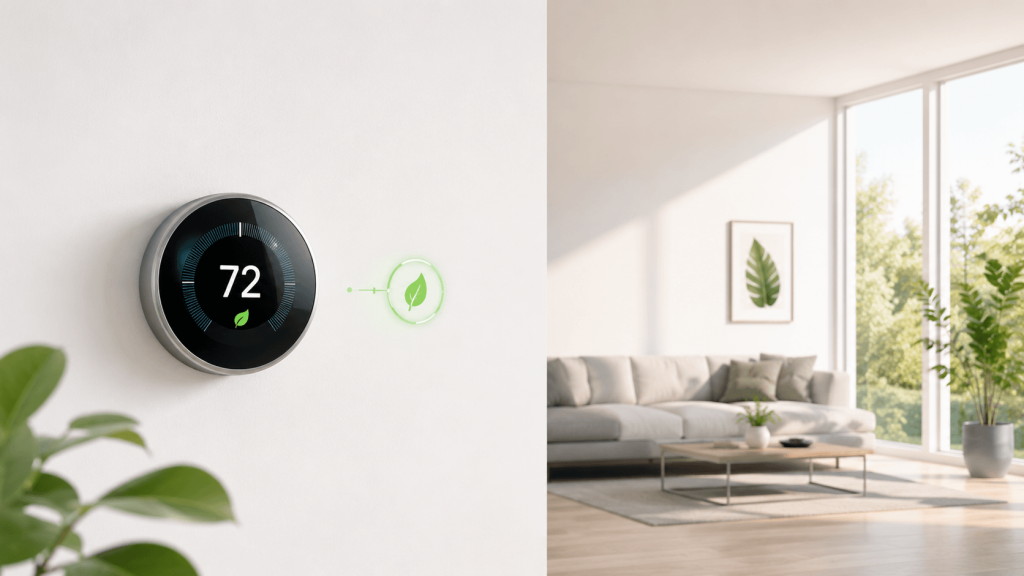
Heating and cooling account for a significant portion of a home’s energy use, making your thermostat one of the most important devices for managing utility costs. Traditional thermostats often maintain a fixed temperature regardless of whether anyone is home, leading to unnecessary energy consumption.
Smart thermostats solve this problem by learning your schedule, adjusting temperatures automatically, and allowing remote control through a smartphone. Many models also provide detailed energy reports, helping homeowners identify opportunities to reduce energy usage without sacrificing comfort.
If you’re looking to lower your monthly utility bills while making your home smarter, here are the best smart thermostats for energy savings in 2026.
Why Upgrade to a Smart Thermostat?
Unlike programmable thermostats, smart thermostats can adapt to your daily routine. They use Wi-Fi connectivity, sensors, and mobile apps to make heating and cooling more efficient.
Some of the biggest benefits include:
- Lower monthly energy bills
- Remote temperature control
- Automatic scheduling
- Energy usage reports
- Voice assistant compatibility
- Increased home comfort
- Reduced environmental impact
Many homeowners notice measurable savings within the first year, especially if their previous thermostat was manually operated.
Top Smart Thermostats for Energy Savings
1. Google Nest Learning Thermostat
Best Overall
The Google Nest Learning Thermostat remains one of the most popular smart thermostats thanks to its ability to learn your daily habits automatically. After a few days of use, it begins adjusting temperatures based on your routine, reducing unnecessary heating and cooling.
Pros
- Learns your schedule automatically
- Attractive premium design
- Remote control via smartphone
- Energy usage reports
- Works with Google Assistant and Amazon Alexa
Cons
- Higher upfront cost
Ideal for: Homeowners who want maximum automation with minimal setup.
2. ecobee Smart Thermostat Premium
Best for Large Homes
The ecobee Smart Thermostat Premium includes an advanced room sensor that measures temperature and occupancy in different parts of your home. Instead of focusing only on the hallway, it helps maintain a comfortable temperature where people actually spend time.
Pros
- Smart room sensors
- Built-in air quality monitoring
- Voice control support
- Excellent energy reports
- Premium build quality
Cons
- More expensive than entry-level models
Ideal for: Larger homes with multiple frequently used rooms.
3. Honeywell Home T9
Best Value
Honeywell has been a trusted name in home climate control for decades, and the T9 combines reliability with modern smart features.
Pros
- Easy installation
- Smart room sensors
- Affordable price
- Geofencing support
- User-friendly mobile app
Cons
- Interface is simpler than premium competitors
Ideal for: Families looking for dependable performance without spending too much.
4. Amazon Smart Thermostat
Best Budget Option
If you’re new to smart home technology, the Amazon Smart Thermostat is an affordable way to start saving energy. It integrates seamlessly with Alexa and provides many features found in higher-priced models.
Pros
- Budget-friendly
- Alexa integration
- Simple setup
- Energy-saving schedules
Cons
- Fewer advanced customization options
Ideal for: Apartments, small homes, and first-time smart home users.
5. Emerson Sensi Touch 2
Best for DIY Installation
The Emerson Sensi Touch 2 is designed for homeowners who prefer an easy installation process. The companion app provides clear instructions, making setup straightforward even for beginners.
Pros
- Easy DIY installation
- Large touchscreen display
- Reliable scheduling
- Strong privacy features
Cons
- Doesn’t “learn” habits like the Nest
Ideal for: Homeowners who want a simple, privacy-focused smart thermostat.
Comparison Table
| Thermostat | Best For | Learning Feature | Voice Control | Overall Rating |
|---|---|---|---|---|
| Google Nest Learning | Overall Performance | ✅ | Alexa & Google | ⭐⭐⭐⭐⭐ |
| ecobee Premium | Large Homes | ✅ | Alexa & Siri | ⭐⭐⭐⭐⭐ |
| Honeywell T9 | Best Value | Partial | Alexa & Google | ⭐⭐⭐⭐☆ |
| Amazon Smart Thermostat | Budget Buyers | Partial | Alexa | ⭐⭐⭐⭐☆ |
| Emerson Sensi Touch 2 | DIY Users | No | Alexa & Google | ⭐⭐⭐⭐☆ |
How Smart Thermostats Save Energy
Smart thermostats use automation to eliminate wasted heating and cooling. Instead of running your HVAC system continuously, they adjust temperatures based on occupancy, time of day, and weather conditions.
Some common energy-saving features include:
Learning Schedules
Premium models analyze your daily routine and automatically create efficient heating and cooling schedules.
Geofencing
Using your smartphone’s location, the thermostat detects when you leave or return home and adjusts the temperature accordingly.
Smart Sensors
Some thermostats include room sensors that monitor occupancy and temperature in different parts of the house. This helps eliminate hot and cold spots while reducing unnecessary HVAC operation.
Energy Reports
Monthly or weekly reports show how much energy you’ve used and suggest ways to improve efficiency.
Key Features to Consider
Before buying a smart thermostat, consider the following:
HVAC Compatibility
Not every thermostat works with every heating and cooling system. Check compatibility before purchasing.
Smart Home Integration
If you already use Amazon Alexa, Google Home, or Apple HomeKit, choose a thermostat that supports your preferred ecosystem.
Mobile App
A well-designed app allows you to control your home’s temperature from anywhere, whether you’re at work or on vacation.
Installation
Many smart thermostats are designed for DIY installation, but older HVAC systems may require professional assistance.
Energy Monitoring
Choose a model that provides detailed energy reports if lowering utility bills is your main goal.
How to Choose the Right Smart Thermostat
The best thermostat depends on your home and budget.
Choose the Google Nest Learning Thermostat if you want a premium, hands-off experience with automatic learning.
Choose the ecobee Premium if your home has multiple rooms with uneven temperatures.
Choose the Honeywell T9 if you want the best balance of price and performance.
Choose the Amazon Smart Thermostat if you’re shopping on a budget and already use Alexa.
Choose the Emerson Sensi Touch 2 if easy installation and privacy are your priorities.
Frequently Asked Questions
Do smart thermostats really save money?
Yes. By reducing unnecessary heating and cooling, smart thermostats can lower energy consumption, especially in homes where HVAC systems previously ran on fixed schedules.
Is a smart thermostat worth buying?
If you use heating or air conditioning regularly, a smart thermostat can improve comfort while reducing monthly energy costs over time.
Can I install a smart thermostat myself?
Many models support DIY installation. However, older HVAC systems or homes without a common (C) wire may require professional installation.
Do smart thermostats work without Wi-Fi?
Most continue operating as standard thermostats if Wi-Fi is unavailable, but remote control and advanced smart features may be temporarily disabled.
Which smart thermostat is best for beginners?
The Amazon Smart Thermostat and Honeywell T9 are excellent choices for first-time users because they offer straightforward setup and intuitive mobile apps.
Conclusion
A smart thermostat is one of the simplest upgrades you can make to improve your home’s energy efficiency. By automatically adjusting temperatures based on your schedule and occupancy, these devices help reduce wasted energy while keeping your home comfortable year-round.
Whether you’re looking for a premium option like the Google Nest Learning Thermostat, a feature-rich ecobee, or a budget-friendly Amazon Smart Thermostat, investing in the right model can lead to long-term savings and greater convenience.
At Home FLX, we believe smart home technology should make everyday living easier. Explore our other home improvement guides for expert advice on energy-efficient upgrades, smart devices, and practical DIY projects to create a more comfortable and cost-effective home.